
High Gloss Ceramic Clear Coat
Ceramic clear coat is a tough, high-gloss protective topcoat with excellent hardness, chemical resistance, wear performance and UV stability. It’s rated to 260°C, making it ideal for polished engine casings, wheels and fork sliders, and we apply it in-house at our workshop in Heybridge, Essex.
What can ceramic clear coat be applied to?
MC-160 High Gloss Ceramic Clear can be used as a topcoat over:
- all metals, including polished metals
- paints and hydrographics
- composites and fibreglass
- plastics
- PVD (vacuum deposition) finishes


Ceramic clear coat vs standard lacquer
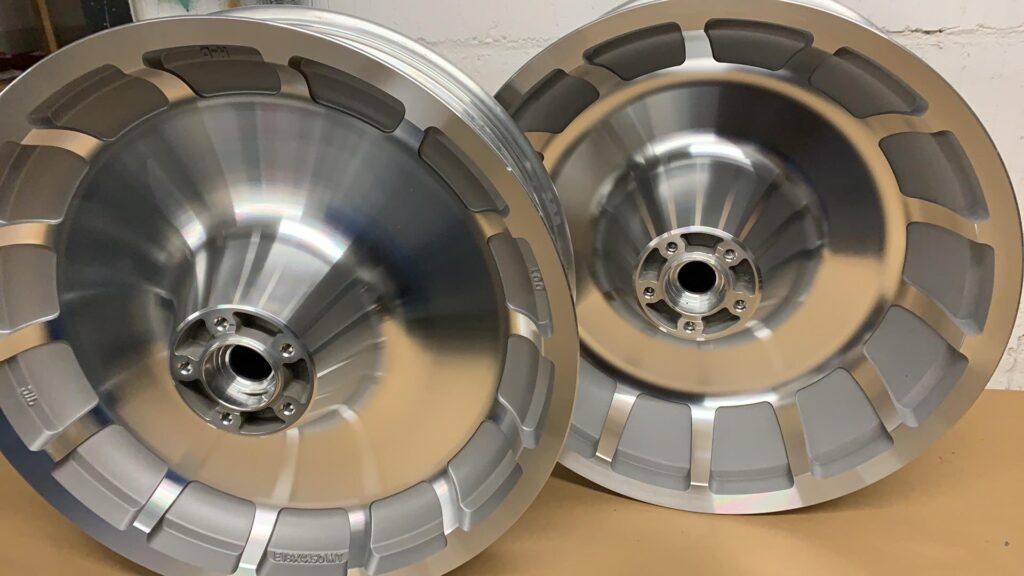
Ceramic clear coat is much tougher than a standard wet lacquer, with high resistance to wheel cleaning products and brake dust. That makes it well suited to polished engine casings and wheel rims.

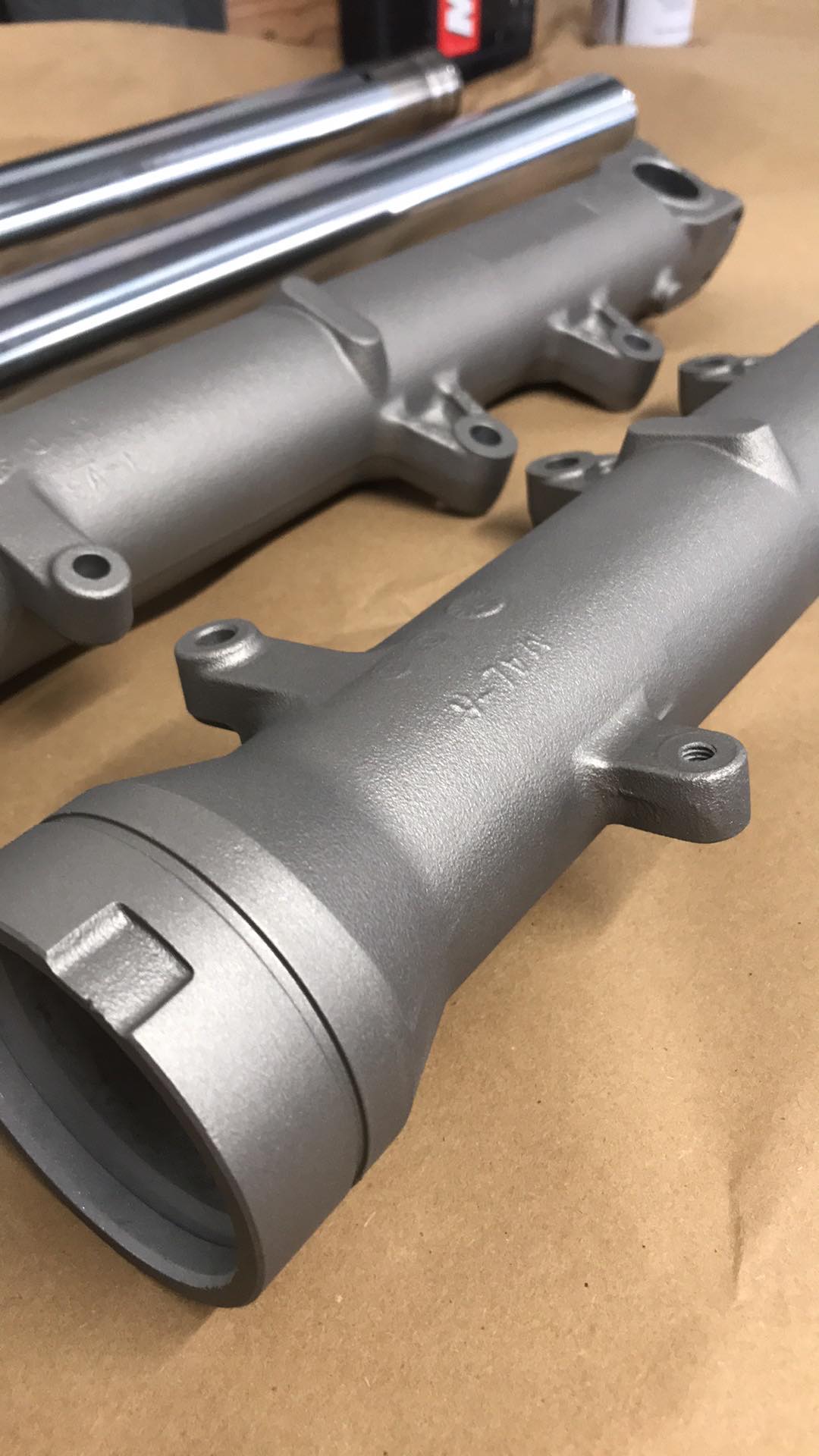
Honda fork casements
These Honda front fork casements were finished in ceramic silver, with the sliders protected by ceramic clear coat.
Ceramic clear for aluminium (MC-5100)
MC-5100 is specifically engineered for aluminium. It’s suitable for aluminium and magnesium alloys, including polished, brushed, raw and anodised aluminium.


Process, guarantee and contact
Every part is carefully prepared, masked where required and then coated.
Cerakote ceramic coatings carry a one-year guarantee. Full details are on our ceramic coating guarantee page.
See our motorbike and engine parts pages for more examples. For a quote, call 01621 841100 or email msb@msbpcl.co.uk. You can also send your parts by courier.
Ceramic Clear Coat FAQs
Is ceramic clear coat better than lacquer?
Yes, for most uses. It’s tougher and far more resistant to chemicals, wheel cleaners and brake dust than a standard wet lacquer.
Can ceramic clear coat be used on polished aluminium?
Yes. MC-5100 is engineered specifically for aluminium, including polished, brushed and anodised finishes.
Can you ceramic clear coat motorbike fork sliders?
Yes. For example, we’ve finished Honda fork casements in ceramic silver with sliders protected by ceramic clear coat.