
Ceramic Coating FAQs
Answers to the questions we’re asked most often about ceramic coating. If your question isn’t covered here, call 01621 841100 or email msb@msbpcl.co.uk.
About ceramic coating
What is ceramic coating?
Ceramic coating is a thin, heat-resistant, ceramic-based finish applied to metal parts to protect them against heat, corrosion, chemicals and wear. There are several types:
- Thermal barrier coatings keep heat in, as on exhausts.
- Heat-dissipating coatings help parts shed heat, as on radiators.
- Dry film coatings reduce friction.
- Ceramic clear coats protect polished finishes.
What are the benefits of ceramic coating?
Ceramic coating helps parts perform better and last longer:
- Lower radiated heat: typically a reduction of around 30–35% in practical terms, and up to 50% in some cases.
- A cooler engine bay.
- Longer component life: it reduces thermal fatigue in critical parts.
- Protection: it guards against rust and corrosion.
- Easy to clean.
- Choice of finishes: a wide range of colours and finishes is available.
Does ceramic coating increase horsepower?
By keeping heat inside the exhaust, ceramic coating helps maintain exhaust gas velocity, which supports engine efficiency. Any gains depend on the vehicle and setup, so we don’t promise specific figures.
What is the difference between ceramic coating and powder coating?
Standard powder coatings give a tough, decorative finish, but they aren’t designed for exhaust temperatures. Ceramic coatings are built for high-heat and specialist applications. For general powder coating, visit our main site, Maldon Shotblasting & Powder Coating.
What can be coated
Which parts can be ceramic coated?
- exhausts, headers and silencers
- exhaust and intake manifolds
- turbos
- cylinder heads and engine blocks
- rocker covers
- brake callipers
- pistons
- motorbike parts
- stoves and exterior flues
Can you ceramic coat stoves and flues?
Yes, subject to the temperature rating of the coating. Ceramic coatings are not food-rated, so they should not be used on hot plates or anywhere they come into contact with food.
Can you ceramic coat aluminium?
Yes. We coat aluminium parts in a range of colours, or protect polished, brushed and anodised aluminium with ceramic clear coat.
Finishes and temperatures
What colours are available?
We offer a wide range of colours and finishes. See our C Series high-temperature colours and Cerakote H Series range.
Which ceramic coating is best for very high temperatures?
C Series coatings are rated up to 1,093°C, and Glacier Silver withstands over 2,000°F. Each colour has its own rating, so we’ll check your chosen colour suits the part.
What is the difference between thermal barrier and heat-dissipating coatings?
Thermal barrier coatings keep heat in, which suits exhausts and manifolds. Heat-dissipating coatings such as Arctic Black and Heat Transfer Grey help parts shed heat, which suits radiators and engine blocks.
Process and curing
How are parts prepared?
Every part is blast cleaned with clean, virgin media, alcohol washed, preheated to dry out contamination, masked where required and then coated.
How long does ceramic coating take to cure?
Allow five full days before running a coated part up to working temperature. Running it sooner will void the guarantee.
Guarantee and aftercare
What guarantee do you offer?
Cerakote ceramic coatings carry a one-year guarantee. Our two-stage system, a plasma coat base with a Cerakote top coat, carries a two-year guarantee, and powder coating carries a five-year guarantee. See our ceramic coating guarantee.
How do I look after ceramic coated parts?
Wash with a standard car shampoo and remove road salt promptly. Avoid acidic cleaners and abrasive products such as T-Cut.
Ordering
Can I send parts by post or courier?
Yes. See our collections and deliveries page.
How do I get a quote?
Call 01621 841100 or email msb@msbpcl.co.uk with photos, approximate sizes and your preferred finish.

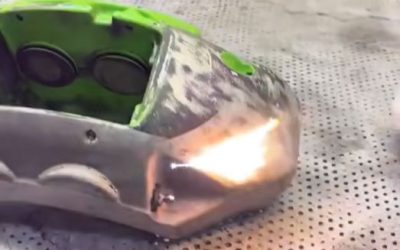
Laser Cleaning: Precise Surface Preparation Before Performance Coatings
Laser cleaning strips rust, oxides and old coatings from precision parts without abrasion, giving a clean, accurate surface ready for ceramic and performance coatings at our Heybridge workshop.

Ceramic Coated Cam Covers & Engine Parts: Recent Projects
Recent cam cover, rocker cover and engine casing projects from our Heybridge workshop, finished in high-temperature ceramic and crinkle coatings with highlighted ribs and lettering.
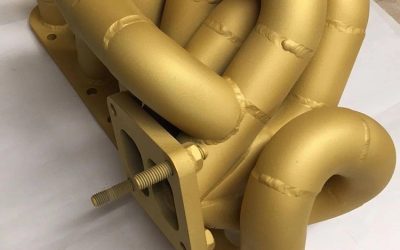
Ceramic Coated Manifolds & Plasma Base Coat: Recent Projects
Recent ceramic coated manifold projects from our Heybridge workshop, including our two-stage plasma base and Cerakote system for cast iron, mild steel and stainless steel manifolds.