
Ceramic Coated Exhausts
Ceramic coating an exhaust keeps heat inside the pipe, lowers outer skin temperatures and protects the metal from rust, corrosion and thermal fatigue. We apply Glacier and Cerakote high-temperature ceramic coatings to exhaust systems, headers and silencers for cars and motorbikes, in-house at our workshop in Heybridge, Essex. Every item is fully prepared before coating and covered by our guarantee.

What does ceramic coating do for an exhaust?
A high-temperature ceramic coating acts as a thermal barrier on the outside of the pipe. We coat the outside of exhausts as standard, and can coat the inside on request. The benefits include:
- Lower skin temperatures: less radiated heat reaches the engine bay, bodywork and nearby components.
- Better exhaust flow: keeping heat inside the system helps maintain exhaust gas velocity.
- Protection from corrosion: the coating seals the metal against rust, oxidation and road contaminants.
- Resistance to thermal fatigue: it helps parts cope with repeated heating and cooling cycles.
- A lasting finish: unlike chrome or bare stainless, it won’t blue or discolour at the bends.
In manufacturer testing on a heavy-duty truck exhaust, C-7300 Black Velvet ceramic coating reduced outer skin temperature by 38% at 1,050°F and 52% at 1,540°F. You can read more on our ceramic thermal barrier page.

Which exhaust parts can be ceramic coated?
We coat most steel and stainless exhaust components, including:
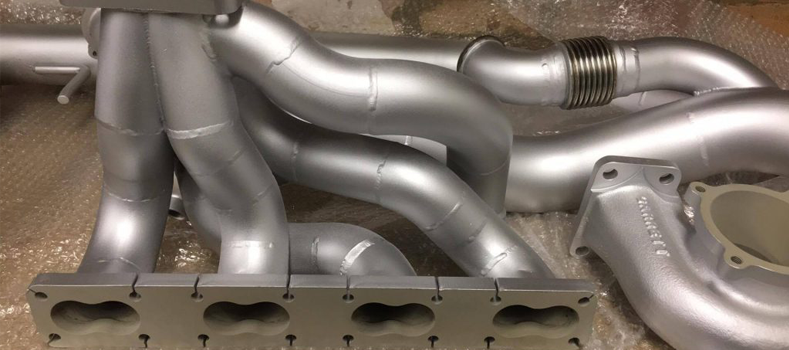
- headers and exhaust manifolds
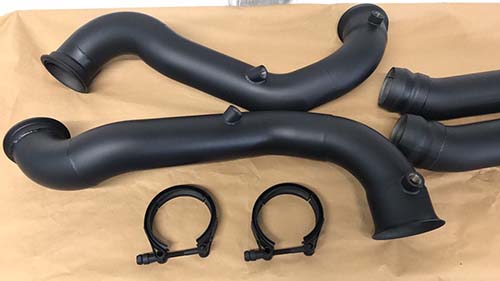
- down pipes and mid-pipes
- full exhaust systems
- silencers and tail pipes
- heat shields
The work covers everything from classic restorations to modern performance cars and motorcycles. For individual components, see our ceramic coated manifolds and ceramic coated turbos pages.
Choosing the right finish
Each ceramic finish has its own temperature rating, so we’ll recommend one that suits how hot your exhaust runs. Popular choices include:
- Glacier Silver: formulated to withstand over 2,000°F, including thermal shock straight into water.
- Graphite Black: performs at temperatures above 1,000°C.
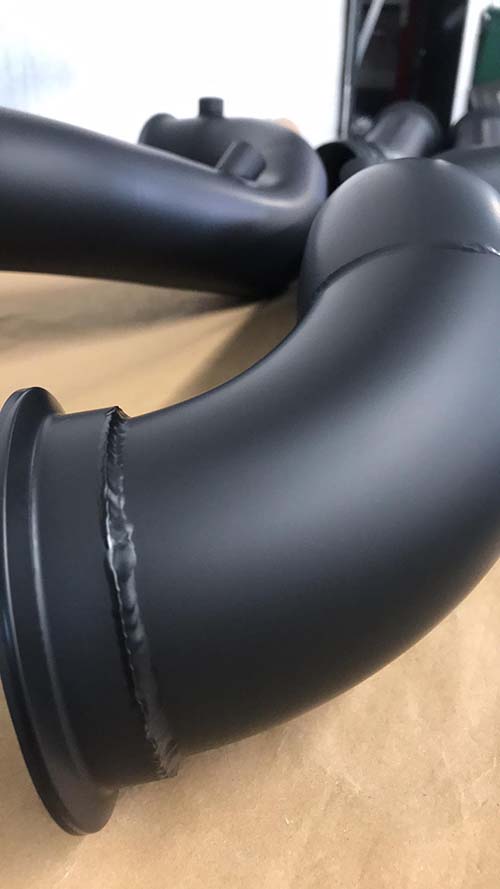
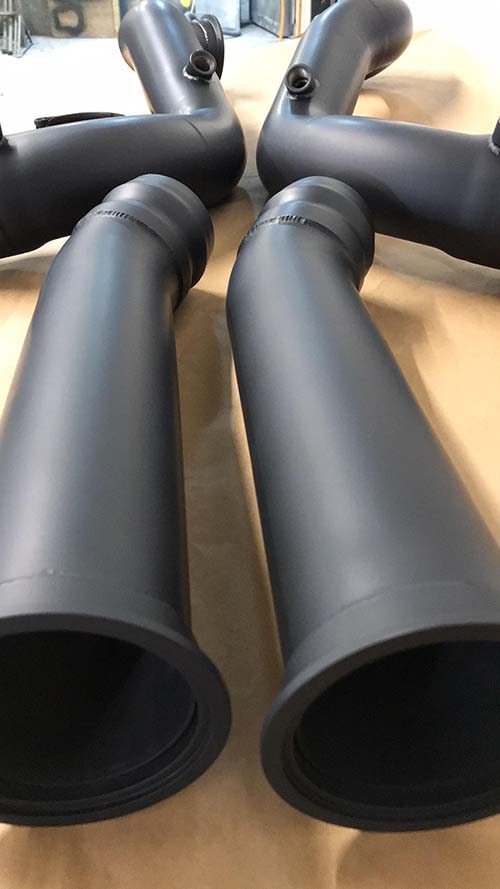
- Satin and semi-gloss black: a deep black finish rated up to 870°C, popular for blacking out motorcycle exhausts.
You can browse the full colour range on our C Series swatches page. If you choose a colour with a lower temperature rating than your exhaust needs, the guarantee will not apply, so we’ll always advise you at the time of order.

Plasma base coat for cast iron and mild steel
For cast iron and mild steel parts, we recommend an alloy plasma coating underneath the ceramic finish. It helps reduce heat loss and disguises minor corrosion pitting, and it extends the guarantee to two years. It does leave a very slightly textured finish.
Our exhaust coating process
- Blast cleaning with clean, virgin blast media.
- An alcohol wash to remove any contamination.
- Preheating to dry out the metal.
- Masking where required.
- Application of the chosen ceramic coating system.
Guarantee
Cerakote ceramic coatings carry a one-year guarantee. Our two-stage system, a plasma coat base with a Cerakote top coat, carries a two-year guarantee. Full details are on our ceramic coating guarantee page.
Curing and aftercare
Allow five full days for the coating to cure before running the exhaust up to working temperature. Running it sooner will void the guarantee.
After that, wash with a standard car shampoo and remove road salt promptly. Avoid acidic cleaners and abrasive products such as T-Cut.
Sending us your exhaust
You’re welcome to drop parts at our Heybridge workshop, or send them by courier. Our collections and deliveries page explains how.
For a quote, call 01621 841100 or email msb@msbpcl.co.uk. Photos, sizes and your preferred finish help us price the job accurately.
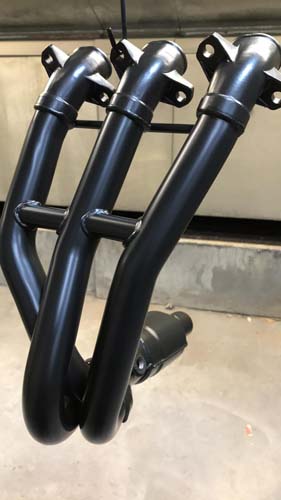


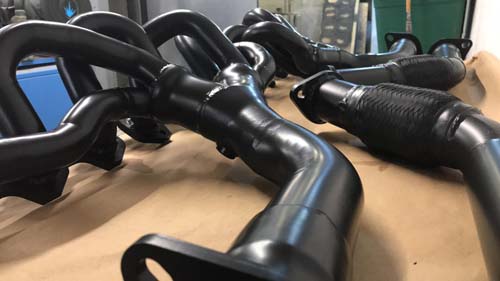


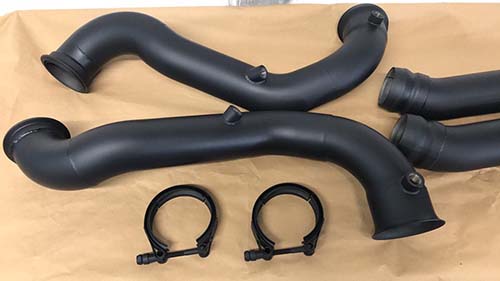


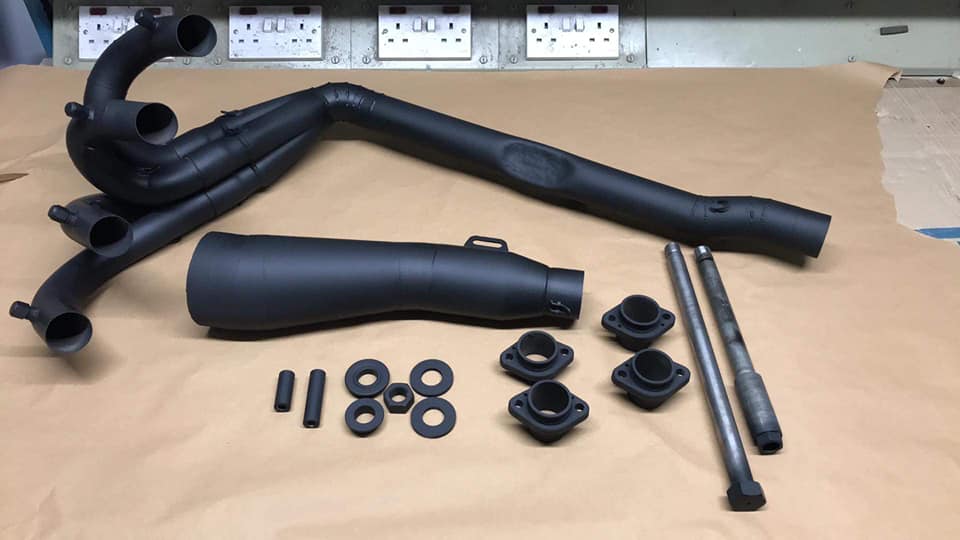


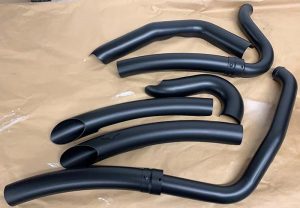
Ceramic coated motorcycle exhaust system, now fitted to the bike

Thanks once again for a great job, its transformed the look of the bike completely!!




Ceramic Coated Exhaust FAQs
Does ceramic coating an exhaust reduce heat?
Yes. Ceramic coating acts as a thermal barrier, keeping heat inside the exhaust and lowering outer skin temperatures, which helps keep the engine bay and nearby components cooler.
Can you ceramic coat a stainless steel exhaust?
Yes. Stainless steel exhausts can be ceramic coated after proper preparation. The coating also stops stainless from blueing or discolouring at the bends.
How long does exhaust ceramic coating last?
Correctly applied and cured, a high-temperature ceramic coating gives long-term protection. Our work is guaranteed for one year on Cerakote ceramic coatings, or two years with our two-stage plasma base and Cerakote system.
How soon can I fit and use my exhaust after coating?
You can fit it straight away, but allow five full days before running it up to working temperature so the coating cures fully.
Do you ceramic coat motorbike exhausts?
Yes. We regularly coat motorcycle exhaust systems, headers and heat shields, as well as car exhausts and manifolds.